TLDR: If you are an individual planting member (not in the collective) and you are overwintering kale or collards, remove them in early spring, and consider refraining from growing brassicas next year.
And Happy Holidays.
If you grow collards, kale or other brassica (cabbage) family plants this summer, then you know the routine: Your sweet leafy greens are swarmed by harlequin bugs and flea beetles, gnawed to pieces by cabbageworms and cabbage loopers, and turn tough and bitter in the heat. But now, in winter, those pests are gone, as the cold weather spurs the plant to produce sweet tender, bug-free leaves… but wait!


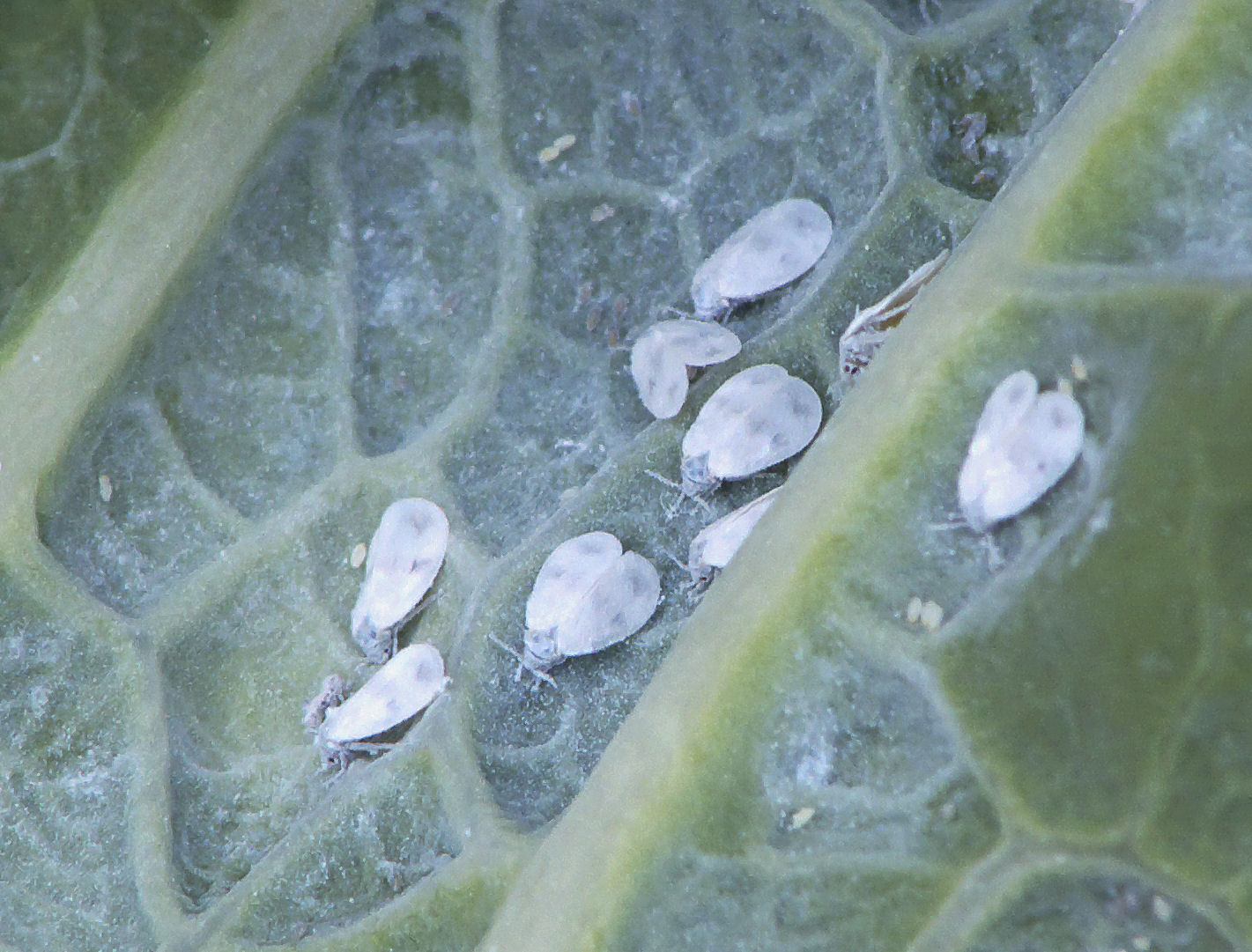
What are those tiny white things all over the undersides of your kale leaves in December???
If you opted to leave kale or other brassica crops in your bed over winter, please check them. They are probably harboring a new pest, the cabbage whitefly (aleyrodes proletella).
These tiny, white insects gather on the undersides of leaves. When disturbed, they fly up in a little white cloud, and then settle back down on the leaves or the ground. Unlike the other pests, they don’t die in winter! (Actually, the males die after inseminating the females, but the females stick around). The females lay eggs in the soil in spring, which then hatch and start the whole process over for the summer. They can cycle through six or more generations per season.
They aren’t a big problem for heading cabbage, broccoli or cauliflower, since they attack only the outer leaves, but they are a problem for kale and collards (and probably mustards too).
Great! What can we do about them?
Good question… There are things we can do to mitigate the impact, but in order for any strategy to be effective, everyone will need to commit to it.
If you have an individual bed and you have brassicas overwintering, please remove them by March. Whatever you don’t harvest can go into the compost as long as you cut it up. If there is a bag of leaves near the compost bins, throw some leaves on top.
Another thing that can help (and can help with other pests as well): Attracting predatory insects (hoverflies, ladybugs, a specific wasp species) by planting a variety of flowering plants and letting plants flower. We are doing this already, but adding alyssum, cilantro (and letting it flower), or other flowering plants to our beds might help. We can also think about more conscious plantings of native flowering plants outside of the beds. Besides that, we have three options (as far as I can tell).
Beyond that, we have three options.
Option 1: Ignore the problem and accept that all of the brassicas will be covered in white bugs. (Actually, this option doesn’t require commitment).
Option 2: Once gardening season starts, monitor the brassicas frequently (at least every few days, if not daily). Harvest the bottom leaves. If you see any cabbage whiteflies on the remaining leaves, knock them off of each individual plant with a strong spray of water.
Option 3: Remove all overwintering plants before spring. Refrain from planting any brassicas that will stay in the bed past June. If you do plant short season (fast growing) brassicas, make sure to harvest by the end of June. Don’t replant any brassicas until 2027 (or try planting seeds in November). This is probably the most effective route, but it requires a sacrifice. (Note: Some brassicas – turnips, kohlrabi – seem to be okay.)
Happy Holidays. Hope to see you all next season, if not before.
Image credits:
Cabbage whitefly with eggs (commonly laid in a circle). By Robin Rosetta, Oregon State University
Adults, eggs, and pupae. By Rasbak at nl.wikipedia, CC BY-SA 3.0, https://commons.wikimedia.org/w/index.php?curid=3260096